Learning to Read
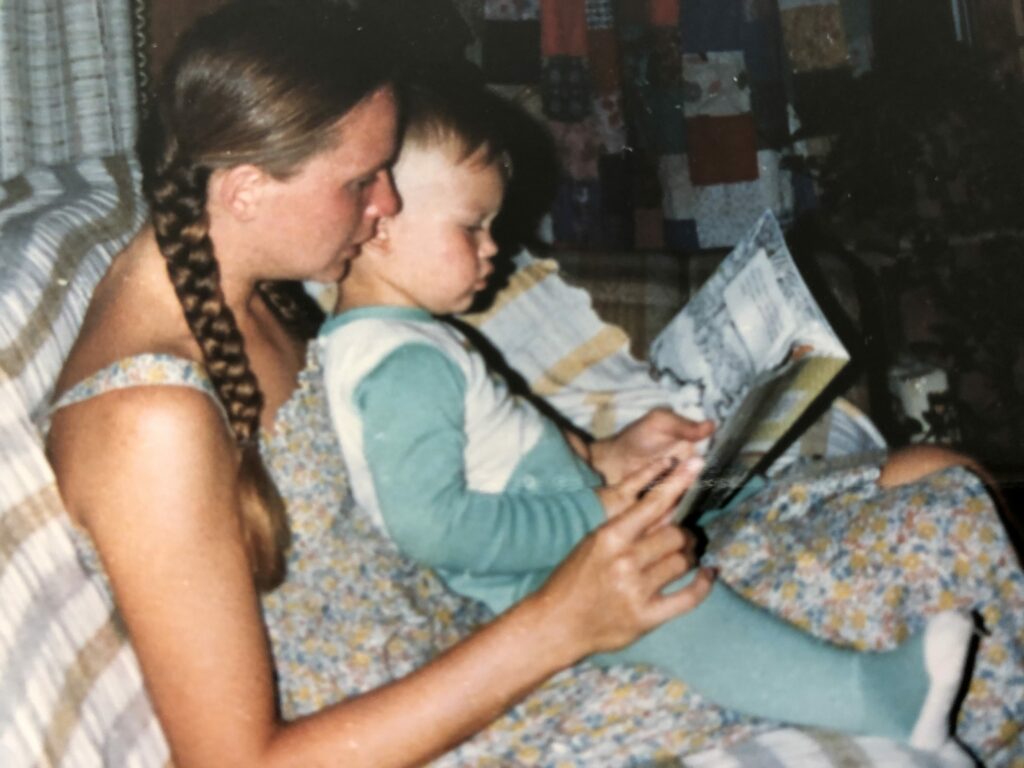
I had the privilege of teaching each of my three sons how to read. It was a thrilling journey for me to lead each of them in this exciting adventure of learning to read.
Before they understood anything at all about the 26 letters of the alphabet or the concept of consonants and vowels, I introduced each of them to good stories by reading them good books.
I did not warn them about how some letters have more than one sound, or about diphthongs or how words are made up of syllables. Nope, all I did was to snuggle with them, open a book and begin reading to them.
I did not start with classics such as Number the Stars or Charlotte’s Web. Instead, I started with books that captured their attention and held their interest. Books such as Goodnight Moon and The Very Hungry Caterpillar were stories that made sense to them with colorful illustrations representing the story.
After I gave them a taste for good stories, then their appetites to learn how to read for themselves took hold. Only after they had an appetite for learning to read, could I introduce them to the harder work of learning the letters, the various sounds, syllables and diphthongs.
Reading to Learn
I had my reasons for teaching my sons to read. I knew that unless they could read, they would never become independent learners, they would never enjoy a good story for themselves, they would never read a book that would teach them about what they wanted or needed to know. If they didn’t learn to read, they’d never read the Bible.
But, by the time they learned to read, they each had a Bible with more pictures than words. Then, as they grew older, they each had a Bible with more words than pictures.
One of my sons even preferred the Bible that I’d started with, The Living Bible Paraphrased. When I’d open this Bible in the mornings to read it, I’d find that he’d written in the margins or underlined verses that resonated with him. Finding his marks in my Bible made my heart sing. He was reading and understanding what God’s word had to say to him.
Knowing the Author’s Intent
As my sons began reading books for themselves, I told them that knowing something about the author would help them to understand the author’s intent for writing. I related to them that good authors have good intentions. Good authors have good lessons to teach, helpful information to give or wholesome ways to entertain.
Such was the reason I first began reading the Bible. I wanted to know the God I had chosen to follow and I believed I’d get to know him through what had been written about him in the Bible.
When I started reading the Bible I did not know that it was inerrant, infallible, living, active and working in me. I did not understand the big difference between the Old Testament and the New Testament. Justification, redemption and sanctification were foreign words. But, I underlined verses and phrases that resonated and helped me to get to know the intent of the authors. The authors’ intention is to point to the promises and perfection of God and to Jesus as our Savior.
After reading the Bible in order to learn more about the God I’d chosen to follow, then I could study the Bible. Studying the Bible taught me the differences between the Old Testament and the New as well as finding explanations for words such as justification, redemption and sanctification.
Why Bother?
Why bother knowing an author’s intent? Knowing the author of a story shines a light on what they write. An author with good intentions has good lessons to teach and lifesaving information to convey. Reading the Bible conveys who God is and what he does. He is alive, He is active and He is working on our behalf.
1 Comment
Leave a Comment
New Release
I love the photo of you and…Jacob?
Tobin loves books read to him because Dave and Anna love books and read to him from day 1!